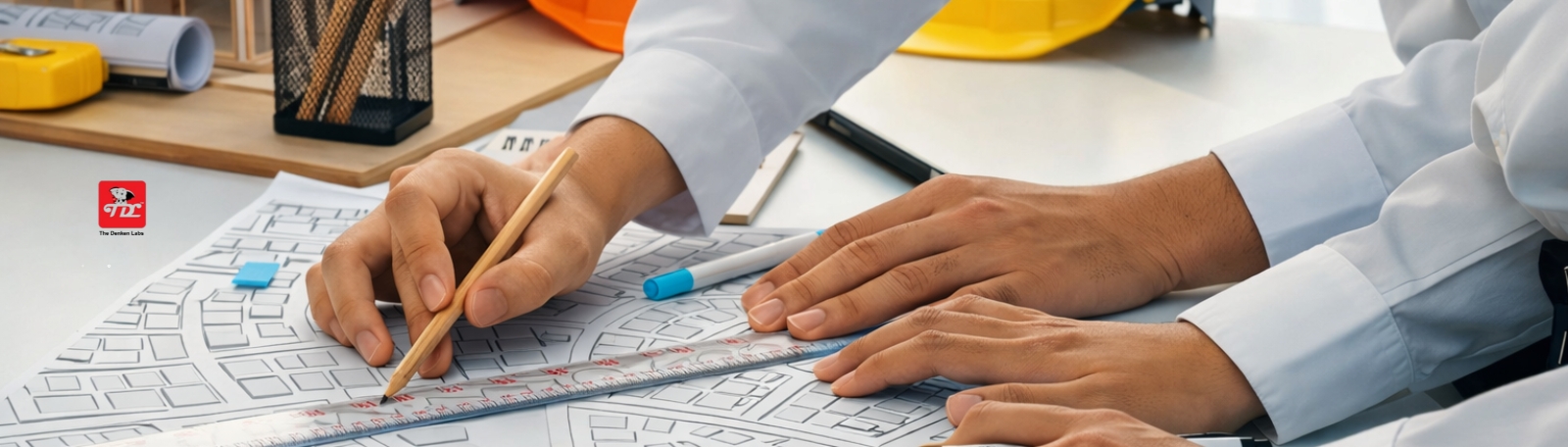
TDL Engineering Services: Bridging the Gap Between Materials Science and Spatial Intelligence
The Foundation of Progress
New materials have been among the greatest achievements of every age. From the Bronze Age to the Silicon Age, they have been central to the growth, prosperity, security, and quality of life of humans since the beginning of history.
At TDL Engineering Services, we recognize that it is always new materials that open the door to new technologies, serving as the catalyst for breakthroughs in:
Civil & Construction Engineering
Chemical & Nuclear Sciences
Aeronautical & Mechanical Systems
Biomedical & Electrical Innovations
At the Forefront of Innovation
Materials scientists and engineers continue to be at the forefront of these diverse areas of science. Their work influences our lives each time we buy or use a new device, machine, or structure. By understanding the building blocks of our world, TDL Engineering Services helps create the infrastructure of the future.
The Modern Frontier: Data as a Material
Bill of Materials (BOM): A comprehensive list of valves, flanges, and fittings.
In the same way that steel redefined cities, Spatial Data is the "new material" of the 21st century. At TDL Engineering Services, we apply the same engineering precision to GIS Mapping and Spatial Analysis. We treat geographic data as a raw material, refining it into the structural intelligence needed to drive global engineering and agricultural development.
Precision in Every Pixel: Our GIS Design Philosophy
At TDL Engineering Services, we don't just "make maps"—we engineer spatial frameworks. We understand that for a Bill of Materials (BOM) to be truly effective, every valve, flange, and fitting must be accurately represented within its physical and geographic context.
The TDL Advantage: Beyond Traditional Mapping
High-Fidelity Cartography:
Transforming raw engineering data into presentation-ready visuals for stakeholders and regulatory bodies.
Layered Insight:We integrate structural specifications with terrain analysis, environmental data, and existing infrastructure to provide a 360-degree view of your project.
Accuracy-First Data Processing:Applying the same rigorous quality control used in mechanical engineering to our geospatial datasets.